


Cube Escape: Paradox
4.85.06K Reviews
App Specs
- Version
- 1.3.3
- Updated On
- License
- Free
- Downloads
- 5,000,000+
- Developer
- Rusty Lake
- Categories
- Adventure
- Platform
- Android
Screenshots
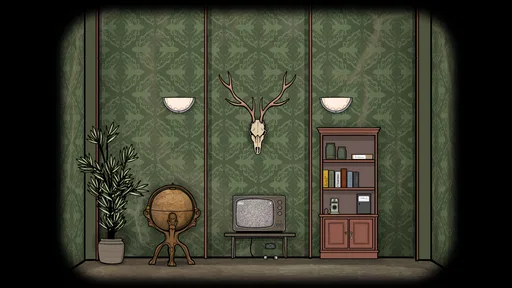

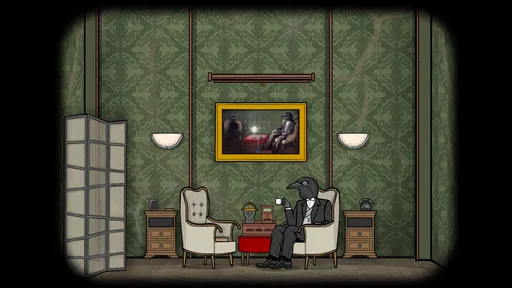
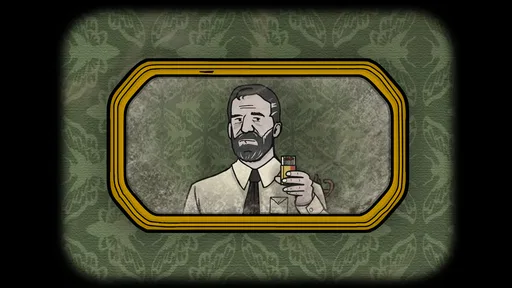

 Analysis by AppCompare
I went into Cube Escape: Paradox expecting a compact point-and-click mystery, but what stayed with me was its unusual balance between familiar detective work and unsettling dream logic. You play as Dale Vandermeer, a detective trying to get out of a strange Cube Escape room, and the game makes that simple objective feel increasingly complicated through observation, object handling, and a steady stream of uncomfortable questions. It is an adventure game from Rusty Lake, the studio known for building odd, interconnected mysteries rather than straightforward action experiences.
The game is free to start, which makes it easy to recommend to curious players who enjoy solving things at their own pace. It is rated Teen, and that feels appropriate: the atmosphere is disturbing, some imagery is macabre, and the story is not designed for very young players. On Android, it supports version 6.0 and later, while the current release is 1.3.3. I would not describe it as a casual time-killer in the usual sense. It is better suited to a quiet session with headphones or a notebook nearby, especially if you like games that leave you thinking about what you just saw.
A strange room built around careful observation
I approach the room as a small investigation rather than a checklist, because the useful details often make sense only after I have seen them in context. In this section, I focus on a steady first pass: what I inspect, what I keep in mind, and how I avoid turning uncertainty into random tapping. That baseline makes it easier to build a more deliberate routine.
The first minutes establish the right kind of tension
The opening does not rely on a long tutorial or a flood of instructions. Instead, it places me in a confined setting and lets the room itself become the explanation. Drawers, pictures, objects, and small visual details invite inspection. The important skill is not fast reaction; it is learning to look at ordinary things as if they might be hiding a second purpose.
That approach gives the game a distinctive rhythm. I might spend a moment examining a picture, then switch to a cabinet, then return to the picture after finding a clue elsewhere. The room is not just a backdrop for puzzles. It is the puzzle board, and progress comes from understanding how its parts relate to one another.
The detective framing also helps the investigation feel more purposeful than a random collection of riddles. Dale’s situation gives the objects a sense of context, even when the story becomes deliberately strange. I never felt that the game wanted me to solve abstract problems simply because they were there; it keeps suggesting that every clue belongs to a larger pattern.
Why the puzzles work better when you slow down
The most useful habit is to inspect everything before trying to force a solution. A symbol that looks decorative may matter later, while an apparently obvious object may only become useful after another discovery. I found it helpful to mentally group clues by shape, color, position, and repeated imagery instead of treating each item as an isolated hint.
Worth Reading Before You Choose

EA SPORTS FC Mobile 26 Is a Bigger Football Game, but It Takes Time

Flipboard Shows What News Apps Must Do Beyond the Feed

Switching to Android Auto Means Rethinking Your Driving Routine

Google Calendar Makes a Crowded Week Easier to Manage

Ludo King Makes the Most of the Minutes Between Plans

Baby Panda World Brings Quick Play to Modern Phones, but Its Game Library Feels Busy
That makes the experience rewarding for patient players, but it also creates friction. If I overlook one small interaction, the whole room can feel stalled. The game rarely feels unfair simply because it is difficult; it feels difficult because it expects a different kind of attention from the player. People who prefer explicit objective markers or constant guidance may find this approach frustrating.
A practical tip is to keep a short note of unusual symbols and sequences as soon as they appear. I would not write down every object, because that creates unnecessary clutter. I would record anything that repeats, anything that seems connected to a locked mechanism, and any clue whose meaning is not immediately clear. That small workflow reduces backtracking without removing the satisfaction of solving the connection yourself.
The atmosphere is part of the challenge
Rusty Lake uses sound, stillness, and visual discomfort to make the room feel less trustworthy. The game does not need constant motion to create pressure. A quiet screen can be more unnerving than an obvious threat, particularly when a familiar object appears in an unexpected context.
This is one reason I would play it somewhere calm rather than while multitasking. The mood depends on noticing small changes and allowing the oddness to build. Playing in short bursts is possible, but the experience is stronger when I can remember what I was investigating and stay inside the mystery.
The Teen rating is worth taking seriously for atmosphere as much as content. This is not a cheerful cartoon puzzle adventure. Its imagery and tone may be a poor fit for children, players who dislike unsettling scenes, or anyone looking for a relaxing visual game. For me, the discomfort adds personality, but it will not be an advantage for everyone.
How the current release fits the experience
The current version, 1.3.3, presents the game as a mature entry point into Rusty Lake’s style. I see it less as a title that depends on flashy new systems and more as a focused experience where presentation, clue placement, and story atmosphere matter most. The listed release date is September 19, 2018, so this is not a brand-new adventure built around current mobile trends. That is actually part of its appeal: it feels designed around a contained mystery rather than engagement loops.
For existing players, that focus means the game remains easy to understand. There is no need to learn a complicated control scheme or manage a large collection of menus before getting to the investigation. The core experience is still about tapping, inspecting, combining ideas, and interpreting what the environment is telling you.
At the same time, a player arriving from newer mobile adventures should adjust expectations. The game does not try to compete with large, cinematic productions. Its strength is compression: a small space, a limited set of interactions, and a story that becomes more interesting because the game refuses to explain everything immediately.
What the free model means in practice
The game is free, with in-app purchases listed at $1.99 per item. That makes the initial decision straightforward: download it, spend time with the opening, and decide whether the particular style works for you before spending anything. I appreciate that arrangement for a puzzle adventure because the main question is not whether the controls are enjoyable after a few minutes; it is whether the tone and method of discovery suit me.
I would still approach the purchase option with the right mindset. Paying does not change the fact that the game expects attention and patience. If I am stuck because I have not noticed a visual relationship, spending money will not automatically make the puzzle satisfying. The value comes from the investigation itself, not from rushing through it.
For a household sharing a device, the Teen rating and unsettling presentation matter more than the free price. A parent may want to preview the atmosphere before handing it to a younger player. For an adult who enjoys mystery games, the free entry point is a genuine advantage, particularly when compared with paid adventure titles that reveal their tone only after purchase.
How it compares with more familiar mobile adventures
Compared with hidden-object games, this adventure is less about sweeping a scene for every highlighted item and more about interpreting relationships. The answer is often not the largest or most visually obvious object. I have to consider why something is present, what it resembles, and whether a previous clue changes its meaning.
Compared with story-heavy interactive adventures, it offers less emphasis on dialogue choices and more on environmental deduction. I am not mainly deciding what Dale should say or which branch to follow. I am trying to understand the room and uncover the logic beneath its disturbing events.
Compared with conventional escape-room apps, it has a stronger identity. The puzzles are important, but the strange narrative and recurring visual language prevent the experience from feeling like a neutral collection of locks. If I wanted a bright, purely logical brain teaser, I would choose something else. If I wanted a mystery where the setting itself feels suspicious, this is the better match.
Small details that improve the way I play
One useful technique is to revisit locations after making progress instead of assuming that every area has been exhausted. In a game built around visual connections, a newly discovered clue can change how an earlier object looks. This is not the same as wandering randomly; I return with a specific question, such as whether a repeated symbol now has a practical purpose.
Another is to separate observation from interpretation. I first note what I can actually see, then decide what it might mean. That prevents me from locking onto an attractive but unsupported theory. The game’s surreal tone encourages speculation, but the best progress usually comes from combining concrete details rather than guessing the story’s entire explanation.
I also recommend taking a break when the room stops making sense. A short pause can be more helpful than repeatedly tapping the same objects. Because the puzzles depend on attention, frustration makes the screen look flatter and less informative. Returning later often makes a previously overlooked detail stand out.
These habits are especially useful for players using a phone in short sessions. A quick play period works if I leave myself a note about the current question, not merely the last object I touched. “Find the meaning of this symbol” is more useful than “check the drawer again,” because it preserves the reasoning behind the next step.
Where the game may disappoint
The biggest limitation is its dependence on ambiguity. I enjoy games that trust the player, but there are moments when the boundary between clever obscurity and missed interaction becomes thin. If I am not in the mood to inspect a scene repeatedly, progress can feel less like deduction and more like searching.
The confined structure may also feel restrictive to players who want exploration. The room is carefully designed, but it is still a room. There is no broad map to roam, no large inventory adventure, and no action system to provide variety between puzzles. The narrow setting supports the mood, yet it also means the game’s appeal depends heavily on whether I enjoy close examination.
The story’s unusual imagery is another dividing line. I find it memorable, but players who prefer realistic detective fiction may find the symbolism too strange or the explanations too indirect. The game does not present itself as a conventional police investigation, despite placing a detective at its center.
Its age also matters in a practical way. Since the game first appeared in 2018, players seeking the newest mobile presentation may notice that its appeal comes from design and atmosphere rather than modern spectacle. That is not a flaw by itself, but it is a useful expectation to set before installing it.
Who should play it, and who should skip it
I would recommend it to anyone who likes point-and-click adventures, escape-room puzzles, surreal mysteries, or games that reward note-taking. It is particularly good for a player who enjoys discussing theories after playing, because the strange details invite interpretation without turning the experience into a simple checklist.
It is also a strong choice for someone who wants a compact mobile game that can be played without learning complex controls. The free price makes experimentation easy, and the mature atmosphere gives it more personality than many lightweight puzzle apps.
I would skip it if I need clear instructions, fast action, or a gentle family-friendly mood. I would also choose a different adventure if I dislike revisiting screens or feel that an answer should always be logically obvious from the first inspection. This game asks me to tolerate uncertainty, and that is central to both its charm and its most noticeable weakness.
What existing players and newcomers can expect
The game’s reception suggests that it has found a substantial audience: it holds a 4.8 average from around 191 thousand ratings, with more than 5 million installs. Those figures do not replace personal taste, but they match my impression that the formula connects strongly with players who already enjoy Rusty Lake’s unsettling puzzle style.
For newcomers, the important point is that popularity does not make the experience universally accessible. A highly rated mystery can still feel opaque if I prefer direct objectives. I would treat the strong response as a sign that the game has a clear identity, not as a promise that every player will enjoy its pacing.
For returning Rusty Lake fans, this entry works as a focused revisit to the series’ familiar mood. I would approach it with curiosity rather than expecting it to explain every connection immediately. The pleasure is in recognizing patterns while still being surprised by how the room uses them.
What I would watch in the future
With version 1.3.3 as the current release, I would mainly watch for improvements that protect the existing puzzle design without making it too obvious. Better clarity around interactions, smoother handling on supported devices, or carefully placed accessibility options would help newcomers without weakening the mystery.
I would not want changes that turn the investigation into a sequence of prompts. The game’s value comes from noticing and interpreting, so any future evolution should preserve that feeling of personal discovery. The challenge is to reduce accidental frustration while keeping deliberate ambiguity intact.
I would also be interested in how Rusty Lake continues to connect atmosphere and puzzle structure in later work. The strongest part of this game is not one isolated mechanism; it is the way the room, the detective premise, and the unsettling imagery reinforce one another. That combination gives the title a recognizable voice.
After playing, my opinion is clear: this is a distinctive adventure for patient puzzle fans, not a universal recommendation for every mobile gamer. I like that it asks me to observe instead of react, and I appreciate that the free entry point lets me test its unusual tone without a commitment. The experience can be frustrating when I miss a tiny clue, but that frustration is balanced by the satisfaction of finally seeing how the pieces fit.
My recommendation is to try it when you have time to concentrate, not when you want background entertainment. If the confined room, eerie imagery, and indirect storytelling appeal to you, this is an excellent way to spend a quiet evening. If you want a bright, guided, action-oriented adventure, the better choice will be a different game. For me, Rusty Lake’s careful weirdness is exactly what makes this particular investigation worth entering.
Pros
- Clever puzzles reward careful observation and logical thinking.
- Surreal storytelling creates a memorable
- unsettling atmosphere.
- Hand-drawn visuals and sound design fit the mystery perfectly.
- Short chapters make it easy to play in brief sessions.
- Works well for fans of escape rooms and point-and-click adventures.
Cons
- Some puzzles rely on obscure clues rather than clear logic.
- The story can feel confusing without knowledge of the Rusty Lake series.
- Hints may be limited
- making certain sections frustrating.
- The darker themes and imagery may not suit younger players.
- The free and paid content structure differs by platform.
FAQs for Cube Escape: Paradox
What is Cube Escape: Paradox about?
Cube Escape: Paradox is a story-driven point-and-click adventure from Rusty Lake. You play as detective Dale Vandermeer, who wakes up in a strange room with no memory of how he got there. To escape, you must inspect objects, solve puzzles, combine clues, and uncover connections to the mysterious Rusty Lake universe. The game focuses more on atmosphere, investigation, and storytelling than on action.
Is Cube Escape: Paradox free to download and play?
The first chapter of Cube Escape: Paradox is generally available to play for free, while the second chapter may require a separate purchase or premium unlock depending on the platform and store version. Availability and pricing can vary between Android, iOS, and other supported devices. It is worth checking the official store listing before downloading, especially if you want access to the complete story.
Does the game require an internet connection?
Cube Escape: Paradox is primarily a single-player offline puzzle adventure, so an internet connection is usually not needed while solving the game after installation. You may still need internet access to download the application, verify purchases, receive updates, or access optional features connected to the companion film. Playing offline can be useful when traveling or when you want to enjoy the story without interruptions.
Is Cube Escape: Paradox suitable for children?
The game is not designed as a typical children’s puzzle title. Although its controls are simple, Cube Escape: Paradox contains unsettling imagery, psychological themes, dark humor, mystery, and scenes that may feel disturbing to younger players. Parents should review the age rating and consider their child’s sensitivity to suspense, surreal situations, and crime-related storytelling before allowing them to download and play it.
How difficult are the puzzles, and are hints available?
The puzzles range from straightforward object-based tasks to more cryptic challenges involving symbols, codes, patterns, and careful observation. Most solutions can be discovered by examining the environment and connecting clues, but some steps may feel deliberately obscure. The game does not function like an action title, so patience is more important than reflexes. Players who become stuck may need to retrace their actions or consult an external guide.


